Mubadala and Together AI explore UAE infrastructure; Abu Dhabi office confirmed, but no data centre yet
Mubadala's $100M Series C investment now brings an Abu Dhabi presence for Together AI and an agreement to explore UAE infrastructure opportunities. No facility, capacity figure or timetable has been named.
What happened
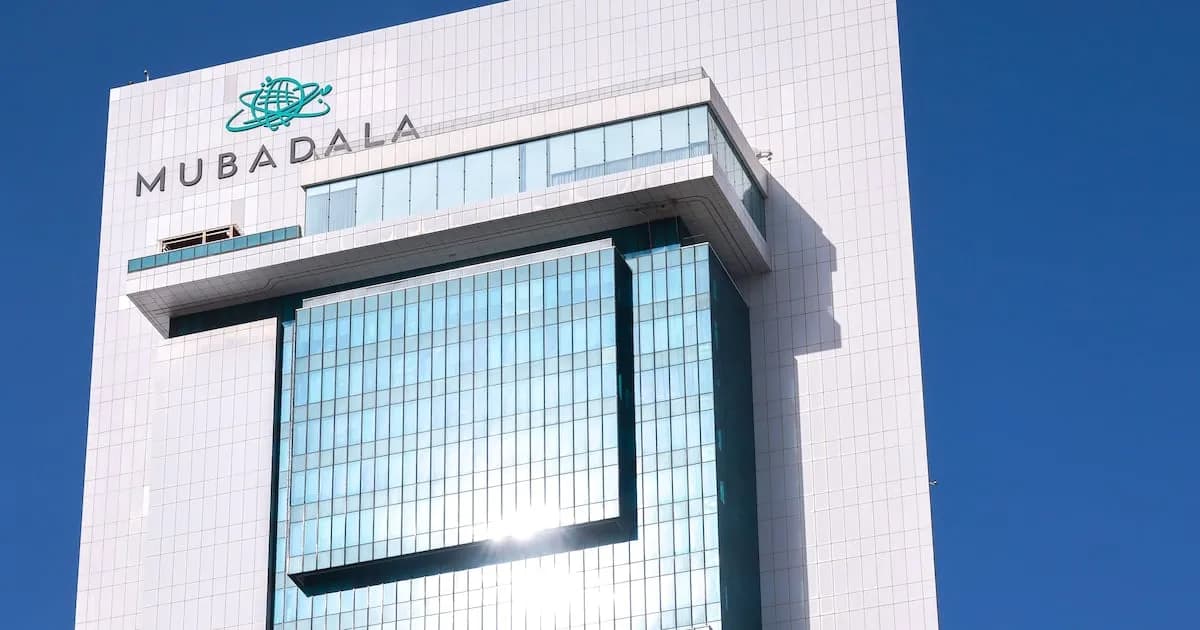
Summary of reporting by WAMMubadala Investment Company and Together AI, the San Francisco AI cloud platform built around open models, announced a strategic partnership on 29 September to explore AI infrastructure and ecosystem opportunities in the UAE. Together AI, founded in 2022, will open a regional office in Abu Dhabi so that its inference and research teams sit closer to developers across the Gulf. Reporting by WAM and The National covers the announcement.
The initiative sits under Mubadala's UAE Investments Platform and follows the Abu Dhabi sovereign investor's US$100 million participation in Together AI's Series C funding round, which closed on 1 July 2026. The wider round raised $800 million at an $8.3 billion post-money valuation, led by Aramco Ventures, with participation from NVIDIA, Vista Equity Partners and General Catalyst. Investors in that round also committed more than 500 megawatts of compute capacity, capitalised separately from the equity round.
“Demand for open-source AI is outpacing compute available to serve it.”
Vipul Ved Prakash, Chief Executive, Together AI
Mubadala positions the collaboration as part of Abu Dhabi's strategy to build sovereign capability across the AI supply chain. Together AI reports serving more than one million developers globally and notes that regional demand for open-source AI continues to accelerate.
What is absent from the announcement matters as much as what is included: no data-centre build, no megawatt or GPU capacity figure for the UAE, no named facility, no enterprise service-level agreement and no date for locally hosted endpoints. The infrastructure programme is explicitly exploratory. For now, Together AI's Abu Dhabi footprint is a commercial office and an exploratory partnership, not in-country compute.
The Azrty take
An office and an exploratory agreement do not equal sovereign compute: build portable model routing now and buy local capacity only when endpoints exist.
The business so what: this alters your vendor roadmap, not your production architecture this quarter. Mubadala put $100 million into Together AI's Series C and has attached an exploratory partnership to it, which provides a strong signal that open-model inference capacity will eventually arrive in the Gulf. However, the confirmed scope remains an Abu Dhabi office and an agreement to identify opportunities. There is no named data centre, no allocated megawattage, no UAE region in the API catalog, and no operational timetable. A bank, healthcare provider or government entity planning 2027 workloads should track the partnership, but any supplier claiming this agreement satisfies UAE data residency requirements today is confusing a press release with tenancy architecture.
Why it matters anyway: the unit economics of efficiently served open models are low enough to reshape build-versus-buy calculations across the GCC. Together AI's published serverless model catalog lists DeepSeek-V4-Flash-0731 at $0.14 input and $0.28 output per million tokens with a 1,048,576-token context window in FP4, openai/gpt-oss-120b at $0.15 and $0.60 in MXFP4, and frontier-tier moonshotai/Kimi-K3 at $3.00 and $15.00. Worked example: an enterprise assistant processing 200 million input tokens and 50 million output tokens monthly costs roughly $42 on DeepSeek-V4-Flash, compared to $1,350 on Kimi-K3. That economic divergence explains why Gulf sovereign capital is backing both sides of this market. Aramco Ventures led the $800 million round and Mubadala committed $100 million, while round investors pledged over 500 MW of compute capacity capitalised separately. Note that this 500 MW figure represents global capacity, not domestic UAE power.
Where engineering teams risk making mistakes: conflating sovereign investment branding with legal jurisdiction, and coupling code to a single API. Nothing in the announcements indicates where inference tokens are processed. What teams can inspect today is standard commercial cloud pricing: Together AI's dedicated model inference pricing charges per minute for each dedicated replica, billing $3.99 hourly for a 1xnvidia-h100-80gb and $8.99 hourly for a 1xnvidia-b200-180gb, with H200 141GB, B300 280GB and GB300 280GB available on custom quotation. An H100 replica running continuously across a 30-day month incurs approximately $2,873. That is a standard global cloud contract without domestic data residency guarantees. The secondary hazard is architectural lock-in: embedding proprietary SDK bindings and provider-specific model strings directly into services makes future migration to local UAE capacity unnecessarily costly.
How Azrty approaches this technically: deploy an OpenAI-compatible gateway in front of all workloads so provider selection becomes a configuration change rather than a code rewrite. Our FastLLM Proxy sits before internal model servers and external hosted providers, consolidating routing, budgets, and access control. On-premises or sovereign GPU fleets run on Kubernetes via our Kuvryn and Kuvryn AI platforms. Routing logic should enforce data classification: restricted records remain entirely on local GPUs, while non-sensitive workloads can burst to external serverless endpoints with exact model strings pinned. Illustrative routing policy:
routes:
  - name: restricted-data
    match: { data_class: restricted }
    upstream: own-gpu-cluster        # internal infrastructure, models served locally
    models: ["qwen3.6-35b-a3b-fp8"]
  - name: general-assist
    match: { data_class: internal }
    upstream: together-serverless
    models: ["deepseek-ai/DeepSeek-V4-Flash-0731", "openai/gpt-oss-120b"]
    fallback: own-gpu-cluster
budgets:
  team-platform: { monthly_usd: 5000, action: throttle }
The strategic upside for the region is substantial: the provider that first delivers production open-model inference in the GCC captures regional latency advantages, sovereign compliance, and enterprise developer volume simultaneously. Gulf sovereign wealth is backing the probable leaders of that shift. The operational risk lies in mistaking financial announcements for production infrastructure. Insist on three verification criteria before routing regulated workloads: an identifiable physical facility, verified local capacity metrics (MW or GPU count), and a UAE endpoint within the provider API. Until then, maintain model-agnostic routing, audit serverless costs against dedicated infrastructure, and treat local capacity milestones as procurement options rather than immediate migration triggers.
What to do now
- Benchmark your primary workloads on Together AI serverless this month with explicit model strings pinned (deepseek-ai/DeepSeek-V4-Flash-0731 and openai/gpt-oss-120b offer a balanced baseline), routed through a gateway such as FastLLM Proxy so upstream providers remain interchangeable.
- Calculate dedicated versus serverless economics before provisioning: a single H100 80GB replica costs $3.99 hourly (around $2,873 per 30-day month continuous), meaning dedicated instances only pay off at high sustained utilisation. Explicitly configure minReplicas and maxReplicas to scale to zero during idle periods.
- Obtain formal reserved-capacity quotations for 4x H100 and 2x B200 180GB setups (H200 141GB and GB300 280GB require bespoke pricing), and compare these totals directly against local colocation and regional cloud providers before making infrastructure commitments to leadership.
- Establish a clear data-classification policy outlining which workloads may call external APIs today, alongside explicit triggers for migrating them back in-country: a named physical facility, disclosed domestic capacity, or an active UAE API region.